Sewage Backup Cleanup in Rowlett, TX
Sewage coming up? Stop using every drain. Stay out of the wet rooms. Call (555) 247-0199 now.
We take emergency calls 24 hours a day for Rowlett homes in ZIP codes 75088 and 75089. Sewage is Category 3 water, the most contaminated kind. Your plumber clears the blocked line. We pump out the sewage, remove what can’t be saved, wash, disinfect and dry your home.
Call (555) 247-0199 now for Sewage Backup Cleanup in Rowlett.
What should I do first when sewage backs up in my house?
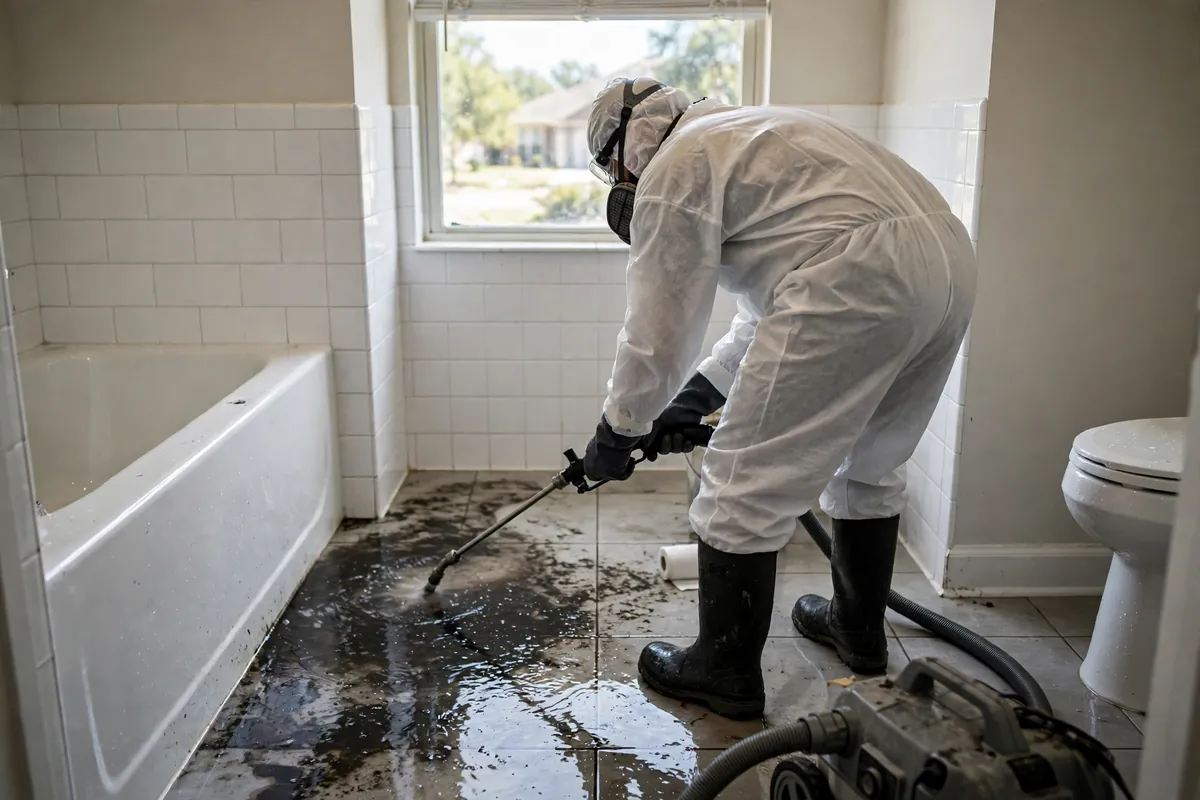
Stop using every drain and toilet in the house, and keep kids and pets out of the wet rooms. Don’t wade in without rubber boots and gloves. Call a plumber to find and clear the blockage, and call us for the cleanup. If the blockage might be in the city line, call the City of Rowlett.
Stop the water. No flushing, no laundry, no dishwasher. Every drop goes into the same full line.
Stay out and gear up. If you must go in, wear rubber boots, gloves and goggles.
Call a plumber. To find and clear the blockage.
Call us. We remove the sewage and dry the house.
What are the early warning signs?
Gurgling drains, slow drains and a rotten egg smell from the sewer. At this stage it’s a plumbing call. Don’t wait for sewage on the floor. Take photos of anything that comes up before it’s cleaned.
Is sewage backup dangerous to clean up myself?
Yes, it can be. Sewage is Category 3 water, the most contaminated class, and it can carry bacteria, viruses and parasites. Mops and household cleaners won’t make soaked carpet, pad or drywall safe. A crew uses protective gear, containment and disinfectant, then dries the structure to meter readings.
The CDC says floodwater can hold dangerous bacteria from overflowing sewage. Its cleanup guidance calls for rubber boots, rubber gloves and goggles, and for washing everything you wore in hot water and detergent. It also says to throw away items you can’t disinfect, like carpet, padding, rugs, upholstered furniture, drywall and insulation.
Keep children, older adults and anyone with a weak immune system out of the wet rooms.
Wash your hands with soap and clean water after any contact, the CDC says.
If someone gets sick after contact with sewage, call a doctor.
Who fixes what: the plumber, the City of Rowlett or us?
A plumber clears and repairs the line. The city handles its own sewer main in the street. We clean up what the sewage did inside your home. If you aren’t sure whose line is blocked, call the city first, and it will tell you.
| Job | Plumber | City | Us |
|---|---|---|---|
| Clear a blockage in your own line | Yes | No | No |
| Clear a blockage in the city main | No | Yes | No |
| Camera inspection to find the cause | Yes | No | No |
| Extract sewage and remove solids | No | No | Yes |
| Remove, wash and disinfect | No | No | Yes |
| Dry the structure and keep the log | No | No | Yes |
Call the City of Rowlett Citizen Action Center at (972) 412 6100, or Rowlett Public Works at (972) 412 6287 on weekdays and (972) 412 6201 after hours for water and sewer emergencies. If a street drain or manhole is overflowing, or neighbors have the same problem, tell the city right away.
The capped pipe in your yard is the cleanout, where a plumber or city crew opens the line. Leave it to them.
Where does sewage show up in a slab home?
On the ground floor, at the lowest fixtures first. In a slab home the sewage spreads across the floor, then wicks up into baseboards and the lower drywall. There is no basement to catch it.
| Place | Why it shows there | What it reaches |
|---|---|---|
| Ground floor toilet | Lowest fixture on the line | Floor, baseboards, lower drywall |
| Tub and shower drains | Low drains on the same line | Bathroom floor and the wall behind |
| Laundry floor drain | Sits at floor level | Utility room slab and nearby rooms |
| Washing machine drain | Adds water to a full line | Laundry room floor |
| Kitchen sink drain | Can back up and carry grease | Cabinet base and kitchen floor |
A toilet that overflows with clean water is a different job. See our toilet and fixture overflow cleanup page.
What does Sewage Backup Cleanup include?
Sewage Backup Cleanup means assessing and mapping the damage, containing the area, pumping out the sewage, removing what can’t be saved, washing and disinfecting, then drying the structure to dry readings. You get photos and a drying log for your claim. Sewage damage cleanup is slower than a clean water job because of the removal and disinfecting.
Call and assessment. We confirm the plumber has stopped the source and check for electrical hazards.
Containment and mapping. We seal off the affected rooms so nothing is tracked through the house, and a meter shows how far the moisture went.
Extraction. Pumps and extractors remove sewage and solids.
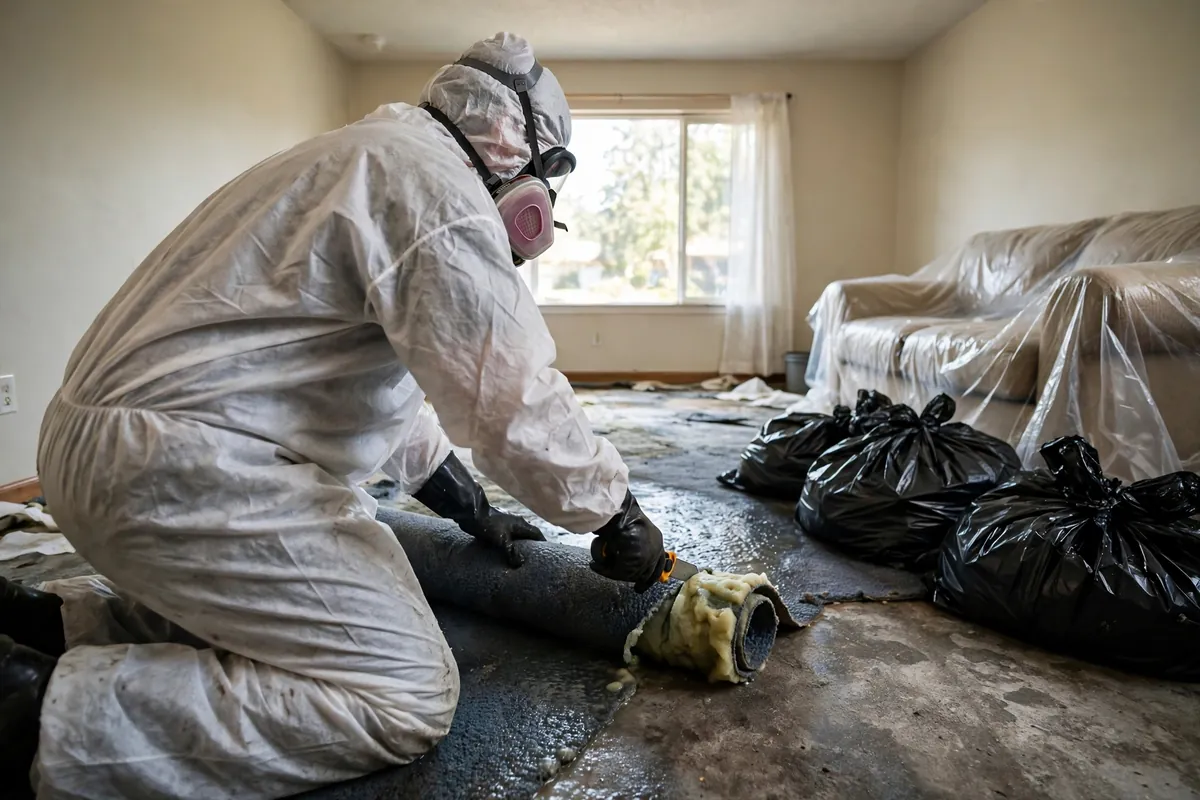
Porous material removal. Carpet, pad, lower drywall and wet insulation come out in sealed bags.
Wash and disinfect. Detergent wash first, then an EPA registered disinfectant, then deodorizing.
Structural drying. Air movers and dehumidifiers dry the structure.
Final moisture check. Meter readings and a drying log.
Sewage Backup Cleanup services for Rowlett homes
We work in houses, townhomes and rentals. If the backup started in a ground floor bathroom, the sewage often reaches the hall, a closet and the wall behind the toilet.
Sewage extraction and removal
Sewage extraction pulls out the water and the solids first, so the rest of the work happens on a clean surface. Sewage removal also covers the materials that touched it, which are bagged and taken out of the house.
Why does the wash come first?
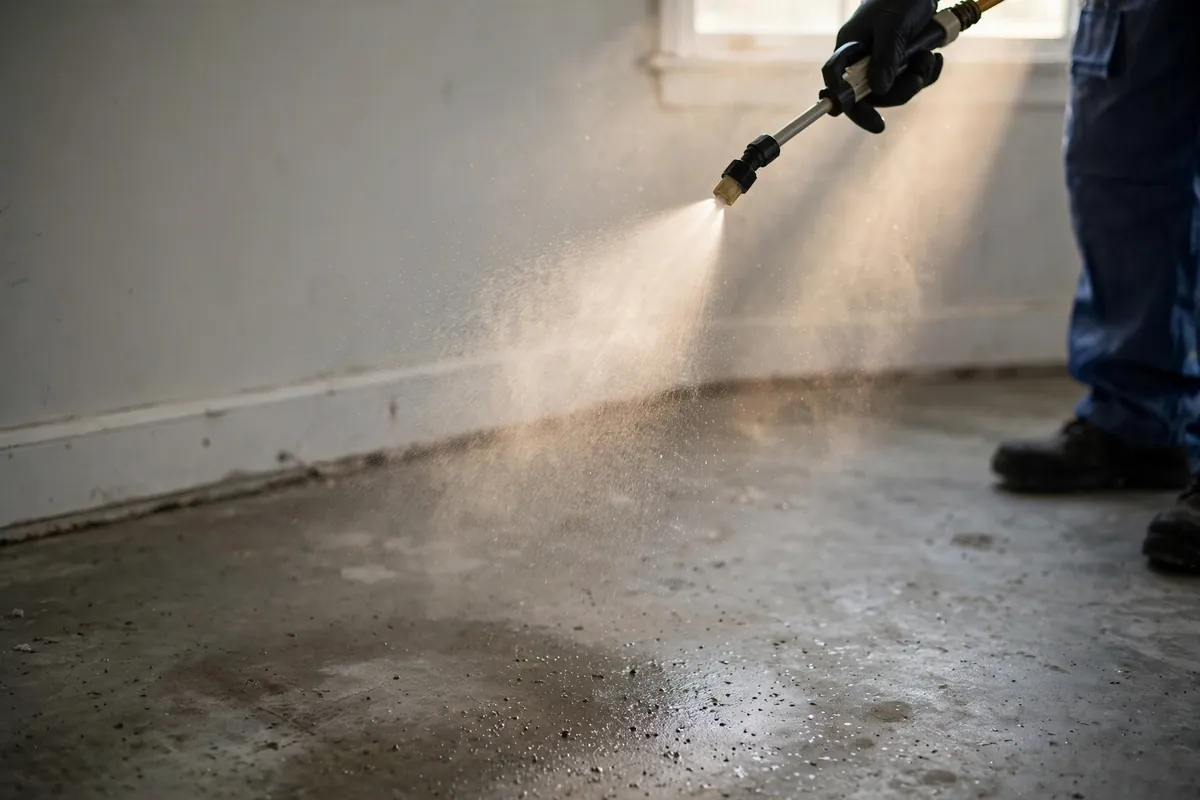
We wash every surface with detergent first, then apply the disinfectant to the cleaned surface. After that, the structure still has to dry, and the EPA says to dry water damaged areas within 24 to 48 hours.
Can my carpet, furniture and drywall be saved?
Porous materials that touched sewage usually can’t be made safe, so carpet, pad, lower drywall and insulation come out. Concrete, tile and sound framing lumber can be washed, disinfected and dried in place. The CDC says to throw away items you can’t disinfect.
| Usually removed | Usually cleaned and dried in place |
|---|---|
| Carpet and pad | Concrete slab |
| Lower drywall and insulation | Tile with sound grout |
| Upholstered furniture and mattresses | Sound framing lumber |
| Particleboard cabinets | Solid surfaces, case by case |
We tell you what stays and what goes before we start. Photograph it first.
How long does sewage cleanup take?
It depends on how far the sewage spread and what it soaked. It usually takes longer than a clean water job, because materials come out and the area is disinfected before drying starts. We stop when meter readings in the wet areas match dry readings elsewhere in your home.
Will mold grow after a sewage backup?
It can, if wet materials stay damp, which is why drying fast matters. We don’t remove mold. If you see or smell it, we’ll point you to a licensed company.
Does homeowners insurance cover sewage backup?
Usually only if you added a water backup endorsement. The Texas A&M Real Estate Research Center explains that the standard policy excludes sewer and drain backup, and the endorsement adds it back. Check your declarations page for the endorsement and its limit, or call your agent.
The Texas Department of Insurance says it depends on your policy. Some policies cover water or sewage that enters through sewers or drains.
Report fast, and document first. Photos and videos before repairs, and keep your receipts.
Temporary repairs are generally fine. Wait on permanent ones until your insurer has seen the damage.
If the insurer says no, ask for the reason in writing and get a plumber’s report on where the blockage was.
TDI answers questions at (800) 252 3439. We give your adjuster the moisture logs and photos. Your insurer decides what it pays.
How do I prevent a sewer backup?
Keep grease, wipes and paper towels out of your drains, even ones labeled flushable. If your drains keep slowing, ask a plumber to check for tree roots. Gurgling, slow drains and a sewer smell are early warnings, so call a plumber then.
A plumber can run a camera inspection to find the cause, and can discuss a backwater valve. We only handle the cleanup after a backup.
Sewage cleanup near you in Rowlett
If you searched for sewage cleanup near me and you live in 75088 or 75089, you’re in our area. We work across Rowlett, from Downtown Rowlett by Main Street and City Hall to the neighborhoods along Lake Ray Hubbard, and off Lakeview Parkway, Dalrock Road, Miller Road and Liberty Grove Road.
We help families near Rowlett High School, Coyle Middle School, Schrade Middle School and Herfurth Elementary, and neighbors around Pecan Grove Park and Herfurth Park. We also reach Garland, Sachse, Wylie and Rockwall.
Sewage in your Rowlett home? Call (555) 247-0199.
Why Rowlett homeowners call us
Comparing a sewage cleanup company? Ask for proof of each of these:
- A real person answers, day or night.
- Proof. Moisture readings and photos for your adjuster.
- Straight advice. We tell you when you need a plumber, an electrician or a licensed mold company.
Sewage questions Rowlett homeowners ask
Is it safe to stay in the house with a sewage backup?
It depends on how far it spread, but keep everyone out of the wet rooms. Sewage can carry germs, and the smell can mean sewer gas. Children, older adults and anyone with a weak immune system should stay clear. If the whole house is affected or someone feels sick, stay elsewhere and call a doctor.
Who do I call first, a plumber, the city or a cleanup company?
Call a plumber to clear your line and the City of Rowlett if the blockage may be in the city main. We handle the cleanup either way. If a street drain or manhole is overflowing, tell the city right away.
What if the city sewer caused the backup and my insurer says no?
The cause and your policy wording matter. Ask your insurer to explain the denial in writing, get a plumber’s report on where the blockage was, and tell the city if it was in its line. Your agent or a lawyer can read the exact wording.
Can I keep using my toilets and sinks?
No. Every flush adds water to a line that is already full, and it can push more sewage into the house. Wait until a plumber clears the line and says it’s safe. Skip the laundry and the dishwasher too.
Will the smell go away after cleanup?
Usually, once the sewage and the contaminated materials are removed, surfaces are washed and the structure is dry. A smell that lingers can mean wet material is still hidden, so we check with a meter. Deodorizing comes after cleaning.
Is a toilet overflow Category 3 too?
If it carries waste or comes from beyond the trap, yes. If it holds only clean water, usually not. When you’re not sure, treat it as Category 3 until a crew checks. See our toilet and fixture overflow cleanup page.
Do you handle mold or biohazard cleanup?
No. Mold removal and biohazard cleanup are separate licensed services, and we don’t offer them. We clean up the sewage, remove what can’t be saved and dry the structure. If you see or smell mold, we’ll point you to a licensed company.
What if the sewage backed up while I was away?
Stay out until you have boots and gloves, don’t flush or run water, and take photos from the doorway. Call a plumber and us. Sewage that sat longer usually soaked more material, so the meter map matters even more.
I rent. What should I do?
Don’t use the drains, then tell your landlord right away. The owner’s policy won’t cover your belongings, so renters insurance matters. We can document the damage for your landlord and your insurer.
Call now for Sewage Backup Cleanup in Rowlett
Stop using the drains, then call (555) 247-0199. We handle Sewage Backup Cleanup in 75088 and 75089.
Call (555) 247-0199Sources
- City of Rowlett: Public Works and the wastewater FAQ
- U.S. Centers for Disease Control and Prevention: Guidelines for Cleaning Safely After a Disaster
- Texas A&M Real Estate Research Center: Come Rain or High Water (sewer and drain backup endorsements)
- Texas Department of Insurance: water damage and mold coverage, and the disaster claims FAQ
- U.S. EPA: A Brief Guide to Mold, Moisture and Your Home
- Texas Department of Licensing and Regulation: Mold FAQ
- Cleanfax: Water damage categories