Flood Water Removal & Storm Cleanup in Rowlett, TX
Water in the house? Get everyone out of the water. Turn power off from a dry spot only. Call (555) 247-0199 now.
We take emergency calls 24 hours a day for Rowlett homes in ZIP codes 75088 and 75089. Floodwater in a house is treated as contaminated, so stay out of it until the power is off. We pump out standing floodwater, take out what can’t be saved, then wash, disinfect and dry your home. Storm cleanup here means the water inside your home. Roofers fix the opening, electricians check wiring, and we handle the water.
Call (555) 247-0199 now for Flood Water Removal & Storm Cleanup in Rowlett.
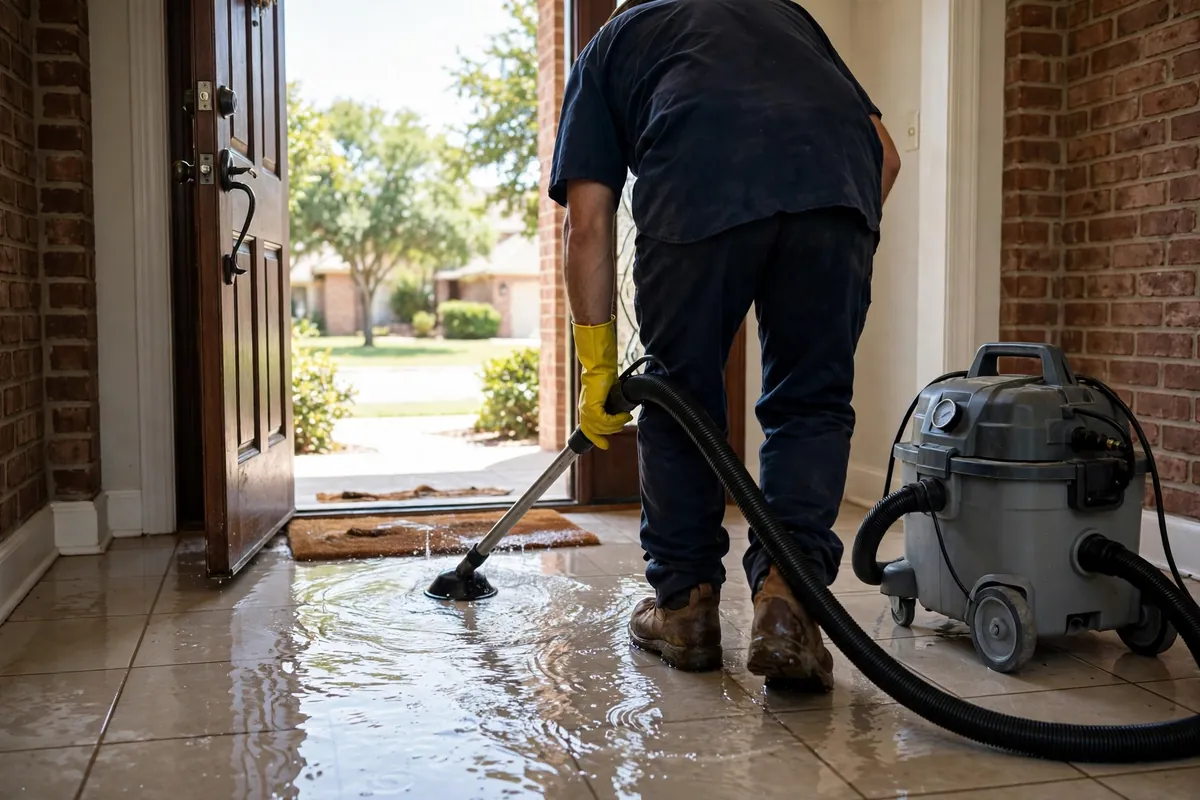
What should I do first when floodwater gets into my house?
Get everyone out of the water, and stay out of rooms with standing water until the power is off from a dry spot. Don’t walk or drive through floodwater, because 12 inches of rushing water can carry away most cars, the National Weather Service says. Photograph the rooms and waterline first, then call your insurer and call us.
What do the NWS depth numbers mean?
The NWS says 6 inches of fast moving water can knock an adult down, 12 inches can carry away most cars, and 2 feet can carry away SUVs and trucks. It also says more than 50% of flood deaths come from driving or walking into floodwater. Turn around, don’t drown.
What should I check before I go back in?
Electricity. FEMA says standing water may be electrically charged. Turn power off from a dry spot only, and have an electrician check any panel that stood in water.
Downed lines. The CDC says never touch a fallen power line, and don’t drive through standing water if one is in it.
Generators. The CDC says keep them outside, at least 20 feet from doors, windows and vents, never in the garage.
Gear. Rubber boots, gloves, goggles and an N95 respirator.
What goes in the first hours checklist?
Photos and video of every room and the waterline, with something for scale. Throw away food and drink floodwater touched. If the city issues a boil water notice, follow it. For city drainage or water problems, call Rowlett Public Works at (972) 412 6287 on weekdays, or (972) 412 6201 after hours for water and sewer emergencies. For danger to life, call 911.
How do I know when flooding is coming to Rowlett?
Watch for National Weather Service alerts, and treat a Flash Flood Warning as a reason to stay off the roads. A Flash Flood Warning means flash flooding is happening or about to start. A Flood Advisory is the lower level: minor flooding in low or poorly drained areas. Rowlett was named in both on the same morning in 2026.
What happened on June 19, 2026?
The NWS in Fort Worth issued a Flash Flood Warning for southwestern Collin, Dallas and southeastern Denton counties, and the text named Rowlett among the places expecting flash flooding. By 7:35 a.m., rain gauges in the warned area had recorded 1 to 1.5 inches of rain in 30 minutes. The warning carried a “considerable” flash flood damage threat and said, “Turn around, don’t drown.” CBS Texas reported that it expired at 11:45 a.m., and Fox 4 reported 4 to 5 inches of rain in parts of the metroplex. A Flood Advisory for the same morning listed Rowlett too.
The warning does not count flooded Rowlett homes. It shows how fast a normal summer storm can turn a street into a creek.
What about the rest of 2026?
Early June had a heavier soaking on the south and west sides of the metroplex. Fox 4 reported that DFW Airport recorded more than 3.5 inches in the first week of June, over 85% of a typical June, which erased the region’s rainfall deficit for the year.
Can I watch Rowlett Creek myself?
Yes, in part. The U.S. Geological Survey runs a stream gauge on Rowlett Creek near Sachse that posts gage height and flow online, marked as provisional data. It tells you how high the creek is. It can’t tell you whether your street will flood, so keep the NWS alerts on too.
How does floodwater get into Rowlett homes?
Through the places water can reach: the creek, the lake, filled storm drains and streets, door thresholds and garages, and openings a storm damaged. Many Rowlett homes sit on concrete slabs, so water spreads flat across the ground floor. There is no basement to collect it.
Rowlett Creek and Lake Ray Hubbard
A Texas State University summary says Rowlett Creek begins four miles west of McKinney and flows southeast 26 miles into Lake Ray Hubbard. Its watershed covers 137.6 square miles and has a fairly large floodplain. Lake Ray Hubbard borders Rowlett on the east and south.
Street flooding and storm drains
When a lot of rain falls fast, streets and drains fill. Ponded street water can then reach doors and garages.
Thresholds, garages and low openings
This is the most common first entry in slab homes. Water crosses the threshold or the garage door seal, or comes through low window and vent openings.
Wind driven rain and slab joints
Storms can force rain through damaged openings. The opening is a roofer’s job. After days of rain, saturated soil can also push moisture up through slab joints, which is slower and smaller but needs the same drying.
If sewage comes up during a storm, that’s a sewer backup. See our sewage backup cleanup page.
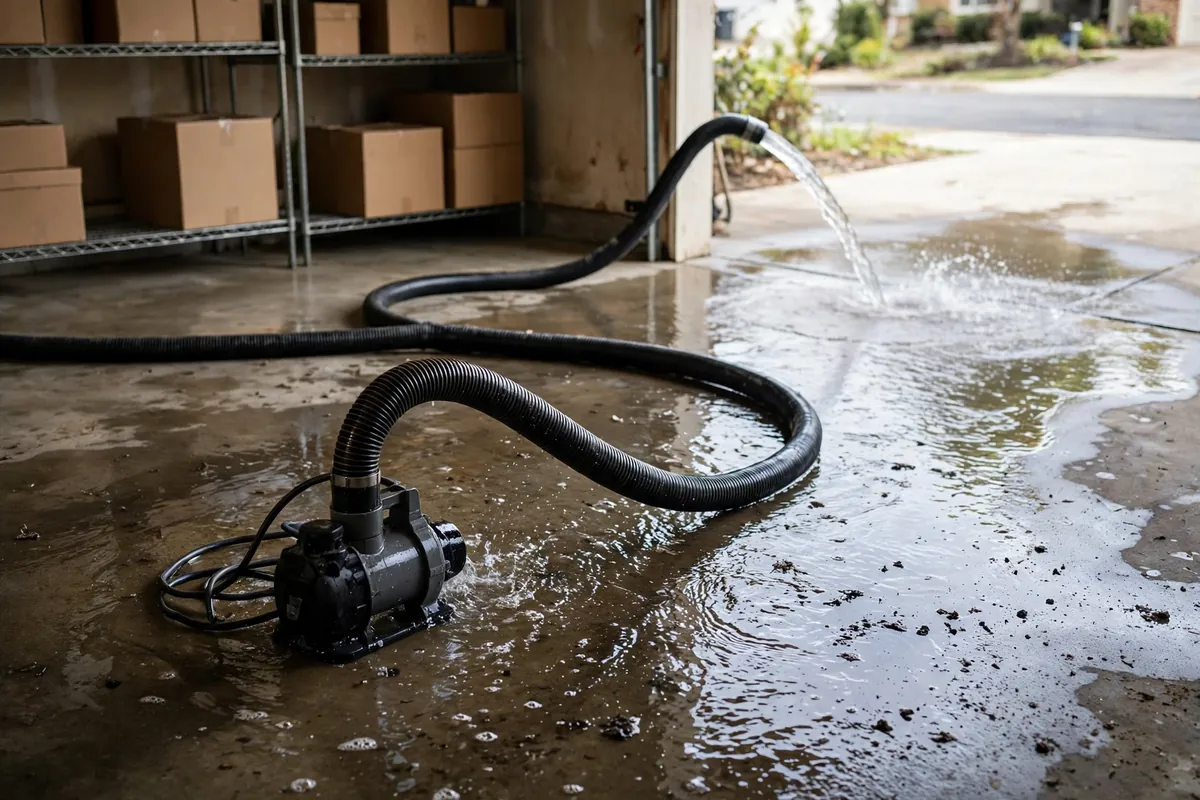
Is floodwater contaminated?
It can be. The CDC says floodwater can carry sewage, chemicals and debris, so treat it as contaminated until a crew checks it. That decides your gear: rubber boots, rubber gloves and goggles, and an N95 respirator or better. Wash clothes you wore in hot water and detergent.
| Class | What it means | Floodwater |
|---|---|---|
| Category 1 | Clean source, like a supply line | Not floodwater |
| Category 2 | Some contamination that can get worse | Possible, the crew decides |
| Category 3 | Grossly contaminated | Often treated this way from the start, class set on inspection |
The IICRC S500 standard sorts water into these three classes, as Cleanfax explains. Floodwater crossed streets, yards and drains, so we treat it as contaminated from the start. Keep children and pets out of the wet rooms until the crew says they’re clear.
Can I get rid of the water myself?
Sometimes, on a small hard floor, if you wear boots, gloves and goggles and the power is safe. Not carpet, pad or drywall, because floodwater can carry sewage and chemicals. If the water is deep, came in from outside, or reached the walls, call a flood cleanup crew.
A portable extractor or wet vacuum is the homeowner scale tool. Tile and grout are the most survivable flooded surface, but grout lines can trap moisture, so check them. If sewage is involved, don’t touch it. See our sewage backup cleanup page.
What you can safely do before we arrive: photograph everything, move small valuables to dry shelves, lift rugs off wet floors, and keep a list of what got wet. Leave the wiring, the walls and the carpet to the crew.
What does Flood Water Removal & Storm Cleanup include?
Flood Water Removal & Storm Cleanup means checking safety and power, mapping the moisture, pumping out the water, removing what can’t be saved, washing and disinfecting, then drying the structure to dry readings. You get photos and a drying log for your claim. Flood cleanup is slower than a clean water job because of the removal and disinfecting.
Assessment and safety. We check for electrical hazards before the crew goes in.
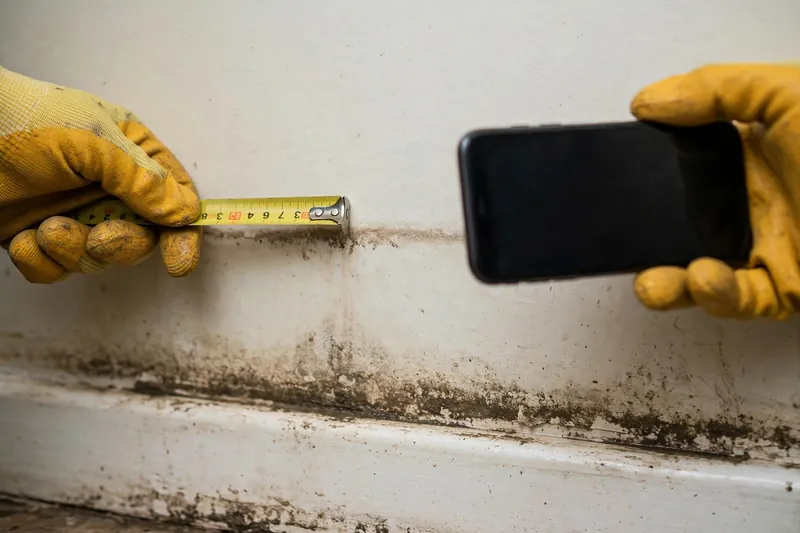
Moisture mapping. A meter and thermal imaging show how far the water went, including inside walls and under flooring.
Extraction. Pumps move bulk water out where it’s deep. Portable extractors finish the floors, carpet and corners.
Remove ruined materials. Carpet pad, soaked drywall, wet insulation, baseboards, laminate and mud and silt inside the home come out.
Wash and disinfect. Detergent and water first, then disinfectant and antimicrobial treatment.
Structural drying. Air movers and dehumidifiers dry the structure.
Final moisture check. Meter readings and a drying log.
What happens in the first 24 hours?
A typical visit: we check power and safety, map the moisture, pump out the water, pull what can’t dry in place, set the drying equipment, and come back the next day for the first meter reading.
Flood cleanup services for Rowlett homes
We work in houses, townhomes and rentals. Rebuilding afterward, sometimes called flood damage restoration, is a contractor’s job. We hand you a dry, documented structure.
Flood water extraction
Flood water extraction pulls out the standing water first, so the rest of the work happens on a cleared floor. Soaked carpet pad is usually the first thing out.
Why does drywall come out above the waterline?
Drywall can hold moisture above the visible waterline, so a meter decides where the cut goes. We cut it out above the waterline so the cavity behind it can dry and be checked. The height follows inspection.
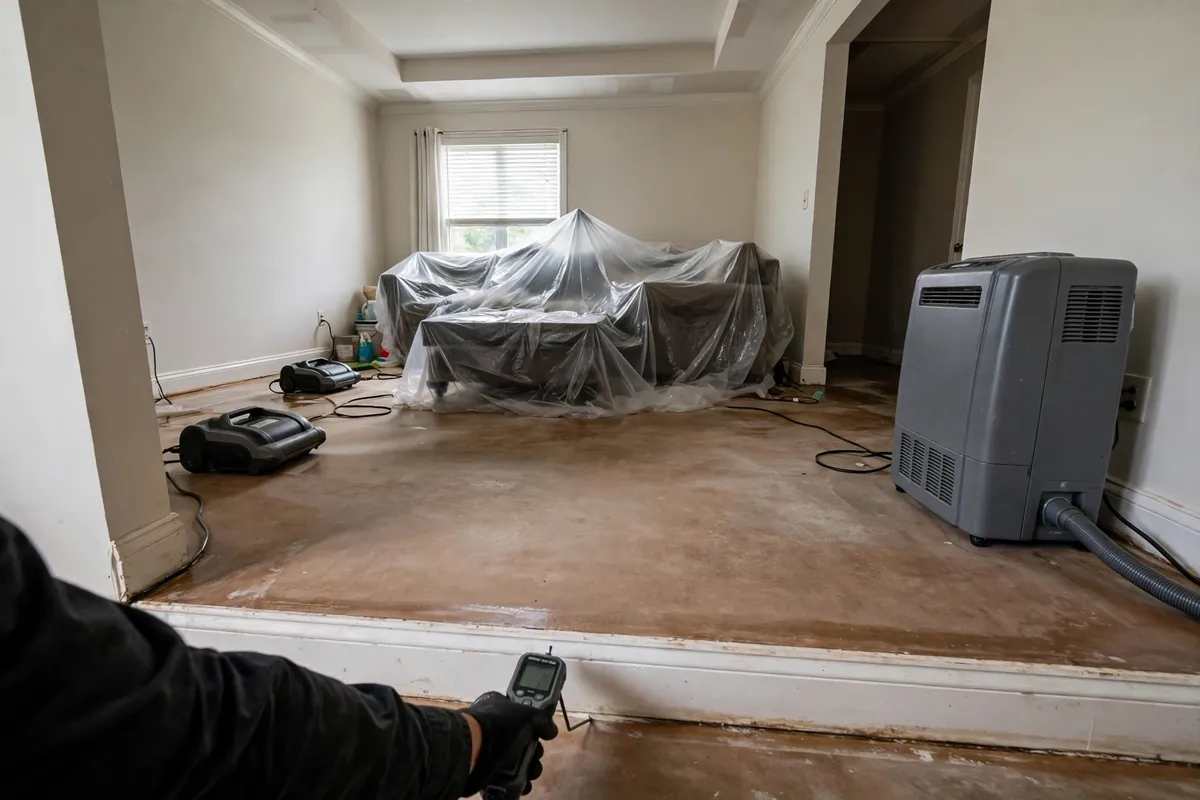
What can be saved after a flood?
Porous materials that touched floodwater usually can’t be made safe. The CDC says to throw away items you can’t disinfect, like carpet, padding, rugs, mattresses, upholstered furniture, drywall and insulation. Hard, solid surfaces can often be cleaned and dried in place.
| Usually removed | Usually cleaned and dried in place |
|---|---|
| Carpet and pad | Concrete slab |
| Lower drywall and insulation | Tile with sound grout |
| Mattresses and upholstered furniture | Sound framing lumber |
| Particleboard cabinets | Solid wood, case by case |
We tell you what stays before we start. Photograph it first, and don’t throw away damaged items until your adjuster has seen them, TDI says. Keep a written list of what was lost, with the age and the value you remember.
How long does it take to dry out a flooded home?
It depends on how far the water spread and what it soaked. We stop when meter readings in the wet areas match dry readings elsewhere in your home. Hardwood and soaked insulation usually take longer than tile.
Start fast. The EPA says to dry water damaged areas and items within 24 to 48 hours to prevent mold growth. We don’t remove mold. If you see or smell it, we’ll point you to a licensed company.
Flood, storm, pipe or sewage: which water is it?
The source decides how we treat it and what your insurance may do. Pick the closest match, and we’ll tell you if it belongs on another page.
| Water source | How we treat it | Where to read more |
|---|---|---|
| Rising floodwater or street runoff | As contaminated, class set on inspection | This page |
| Rain through a storm damaged roof or window | Depends on what it touched | This page, plus a roofer for the opening |
| Burst or frozen pipe | Usually clean at first | Our burst pipe cleanup page |
| Sewer or drain backup | As contaminated, Category 3 | Our sewage backup cleanup page |
Does homeowners insurance cover flooding?
Usually not. Standard homeowners and renters policies typically exclude flood, so you need a separate flood policy, and a new National Flood Insurance Program (NFIP) policy generally takes effect 30 days after purchase, FEMA says. Rain through a storm damaged roof may be treated differently, so ask your agent.
| Water | Usually needs | Check |
|---|---|---|
| Rising water across the ground | A flood policy (NFIP or private) | The 30 day wait |
| Rain through a storm damaged roof | Your homeowners policy | Wind and hail wording, deductible |
| Sewer or drain backup | A water backup endorsement | Declarations page |
What is the NFIP’s status in 2026?
The NFIP runs on short congressional authorizations, and it has lapsed briefly in recent years: for 43 days from October 1 to November 12, 2025, and again from February 1 to 3, 2026. If it lapses again, the NFIP can’t write new or renewal policies until Congress acts. Policies already in force continue through their term, and FEMA says it can still pay valid claims. Private flood insurance isn’t affected. If you want a policy, ask your agent about both NFIP and private options now, because the 30 day wait starts when you buy.
What should I document and file?
Document first. Photos and video of rooms, contents in place and the waterline. TDI says take pictures before repairs. Temporary repairs are generally fine; hold off on permanent ones until you talk to your insurer.
Proof of loss. In the NFIP world, that’s the formal claim document, and your photos and our drying log feed it.
Federal help. FEMA Individual Assistance may be available after a declared disaster. FEMA decides eligibility.
Renters. The owner’s policy won’t cover your belongings. Renters can buy flood insurance for contents.
Mold from a flood isn’t covered, TDI says. TDI answers questions at (800) 252 3439. Your insurer decides coverage.
How do I get ready before the next storm?
Buy flood insurance before you need it, because the 30 day wait means storm week is too late. Texas Ready says to keep a supply kit, leave early if flooding is likely, and shut off the electricity first if you have time.
- Know your way out, and never drive through water.
- Photograph your rooms and valuables now, so a claim has a starting point.
- Know where your power panel is.
- Keep your policy and your agent’s number somewhere you can find them.
- Keep emergency alerts on your phone turned on.
Flood cleanup near you in Rowlett
If you searched for flood cleanup near me and you live in 75088 or 75089, you’re in our area. We work across Rowlett, from Downtown Rowlett by Main Street and City Hall to the neighborhoods along Lake Ray Hubbard, including Bayside and Waterview, and off Lakeview Parkway, Dalrock Road, Miller Road and Liberty Grove Road. Rowlett Creek, the President George Bush Turnpike and the Interstate 30 causeway across the lake are the landmarks we hear about most.
We help families near Rowlett High School, Coyle Middle School, Schrade Middle School and Herfurth Elementary, and neighbors around Pecan Grove Park, Herfurth Park and Paddle Point Park. We also reach Garland, Sachse, Wylie and Rockwall.
Water in your Rowlett home? Call (555) 247-0199.
Why Rowlett homeowners call us
Comparing a flood cleanup company? Ask for proof of each of these:
- A real person answers, day or night. We answer calls 24 hours a day, 7 days a week.
- Moisture mapping with meters and thermal imaging. You see where the water went, including the hidden spots.
- Proof. Moisture readings and photos for your adjuster.
- Straight advice. We tell you when you need a roofer, an electrician, a plumber or a licensed mold company.
Flood and storm cleanup questions Rowlett homeowners ask
Is it safe to stay in the house after a flood?
Not until the power is off and the wet rooms are checked. Floodwater can carry germs, and wet wiring and outlets are an electrical hazard. Children, older adults and anyone with a weak immune system should stay out. If someone feels sick after contact with floodwater, call a doctor.
Can I get rid of the water myself?
Sometimes, on a small hard floor, with boots, gloves and goggles. Not carpet, pad or drywall. If the water came in from outside or reached the walls, call a crew.
Is there sewage in floodwater?
It can be. The CDC says floodwater can carry sewage, chemicals and debris, so treat it as contaminated until a crew checks it.
What does a Flash Flood Warning mean for my house?
It means flash flooding is happening or about to start in your area. Stay off the roads, move valuables up off the floor, and know where your power panel is. A warning is the time to get ready, even if your home never floods.
Can I check how high Rowlett Creek is?
Yes. The U.S. Geological Survey posts gage height and flow for Rowlett Creek near Sachse online, as provisional data. It shows the creek. It does not show your street, so keep NWS alerts on as well.
Does homeowners insurance cover flooding?
Usually not. You need a separate flood policy, and a new NFIP policy generally takes 30 days to start. Your insurer decides coverage.
Is the NFIP still available in 2026?
Yes. The NFIP runs on short congressional authorizations, so ask your agent about its current status. If it lapses, new and renewal NFIP policies stop until Congress acts, but existing policies continue and private flood insurance isn’t affected.
What if rain came through my roof?
Call a roofer for the opening. We don’t do roof repair, tarping or board up. We handle the water inside. Ask your agent how your policy treats storm water.
How much drywall has to come out after a flood?
The crew decides by inspection. Drywall that touched floodwater is cut out above the waterline so the cavity can dry. Wet insulation behind it comes out too.
What should I keep after a flood, and what should I throw away?
Keep a photo and a list of everything wet until your adjuster has seen it. The CDC says to throw away what you can’t disinfect, like carpet, padding, rugs, mattresses, upholstered furniture, drywall and insulation. Ask us about anything you’re unsure of.
I rent. What should I do?
Move to safety, then tell your landlord right away. Renters can buy flood insurance for contents, and a flood policy takes about 30 days to start. We can document the damage for your landlord and your insurer.
Can I use a generator after a flood?
Yes, but outdoors only. The CDC says to keep it at least 20 feet from doors, windows and vents, and never in the garage, because of carbon monoxide. Don’t plug it into a wet outlet, and call an electrician if your panel stood in water.
Do you handle mold, roof or tree work?
No. Mold removal, roof repair, tarping and tree removal belong to other trades. We pump out the water, remove what can’t be saved and dry the structure. We’ll point you to the right company.
How fast can you get to Rowlett?
We answer calls 24 hours a day, 7 days a week. Tell us your street and where the water is coming in, and we’ll give you an honest time.
Call now for Flood Water Removal & Storm Cleanup in Rowlett
Get safe, then call (555) 247-0199. We handle Flood Water Removal & Storm Cleanup in 75088 and 75089, open 24 hours a day.
Call (555) 247-0199Sources
- National Weather Service Fort Worth: Flash Flood Warning and Flood Advisory text for June 19, 2026; Turn Around Don’t Drown; flood safety brochure
- CBS Texas: Roads flooded in North Texas after morning storms, June 19, 2026
- Fox 4 News: Storms drop 4 to 5 inches of rain in parts of Dallas Fort Worth, and the early June 2026 flash flood coverage
- U.S. Geological Survey: Rowlett Creek near Sachse, gauge 08061540
- FEMA: National Flood Insurance for Texans, and the NFIP congressional reauthorization page
- Congressional Research Service: Introduction to the NFIP, and What Happens if the NFIP Lapses
- U.S. Centers for Disease Control and Prevention: Guidelines for Cleaning Safely After a Disaster, and the carbon monoxide guidance
- Texas Department of Insurance: disaster claims FAQ and flood insurance page
- Texas State University: Rowlett Creek summary
- Texas Ready: Floods
- U.S. EPA: A Brief Guide to Mold, Moisture and Your Home
- Texas Department of Licensing and Regulation: Mold FAQ
- City of Rowlett: Public Works
- Cleanfax: Water damage categories