Commercial Water Extraction in Rowlett, TX
Water standing in your business? Get people out of the wet area, shut off a leaking supply only if you can safely reach the valve, and call (555) 247-0199.
Commercial water extraction in Rowlett starts when the water stops. We pump the water off your floor, map how far it spread under the flooring and into the walls, dry affected materials, and compare moisture readings with a dry reference. Your plumber, sprinkler contractor or roofer fixes the source. Call to confirm service for your address in ZIP codes 75088 and 75089.
Call (555) 247-0199 to request Commercial Water Extraction in Rowlett.
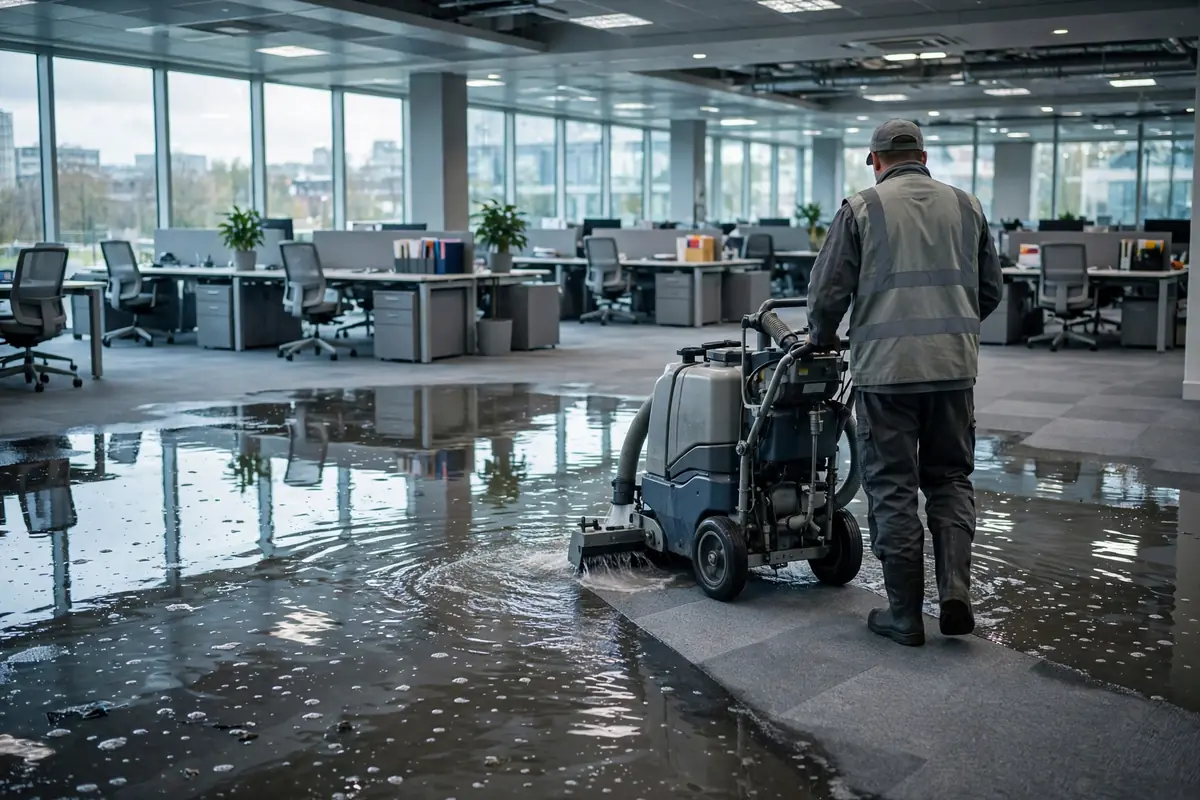
What should I do first when there is standing water in my business?
Get people out of the wet area, then deal with power and the source. Employees, tenants and customers stay out until someone has looked at the floor, the ceiling and the outlets. Standing water creates slip and electrical risks, and the longer it sits, the more it soaks into floors and walls.
People and ceiling
Move employees, tenants and customers away from wet floors, and stay out from under a sagging or stained ceiling tile. Tell people which doors are safe to use.
Mind the power
If water is near outlets, equipment or the panel, turn power off only from a dry spot. If you would have to cross standing water to reach the panel, stay out and call an electrician.
Stop the source
For a plumbing leak, shut off the supply only if you can safely reach the valve. Leave fire sprinkler controls to authorized personnel following the building’s emergency procedure, and notify building management and the fire protection contractor. If a fire is suspected, evacuate and call 911.
Photograph, then lift
Take photos and video from a dry spot of the source, the waterline and the damage before anything is moved. Move dry stock and files only if they are safely reachable, and don’t wade in to do it. Leave wet electrical equipment for a qualified electrician to assess.
Tell the right people
Call your landlord or property manager, tell other tenants if the water could cross a wall or floor, and call your insurer or broker.
Call us for the standing water removal
We ask where the water came from and how long it ran, then plan the job.
What does commercial water extraction include?
Commercial Water Extraction means finding where the water went, pumping it out, removing what can’t be saved, cleaning, then drying until moisture readings match a dry reference. The crew keeps a record of photos and moisture readings, and you can ask for copies for your insurer.
Walk and scope the job. The crew goes room by room and names what will be extracted, what will be removed and what will be dried. You hear the plan before the work starts.
Set the water category. Water from a supply line starts clean, but the category depends on the source, what the water touched, how long it sat and the temperature. The crew sets the category on inspection, using the S500 system. S500 is a classification standard, and we don’t claim it as our certification.
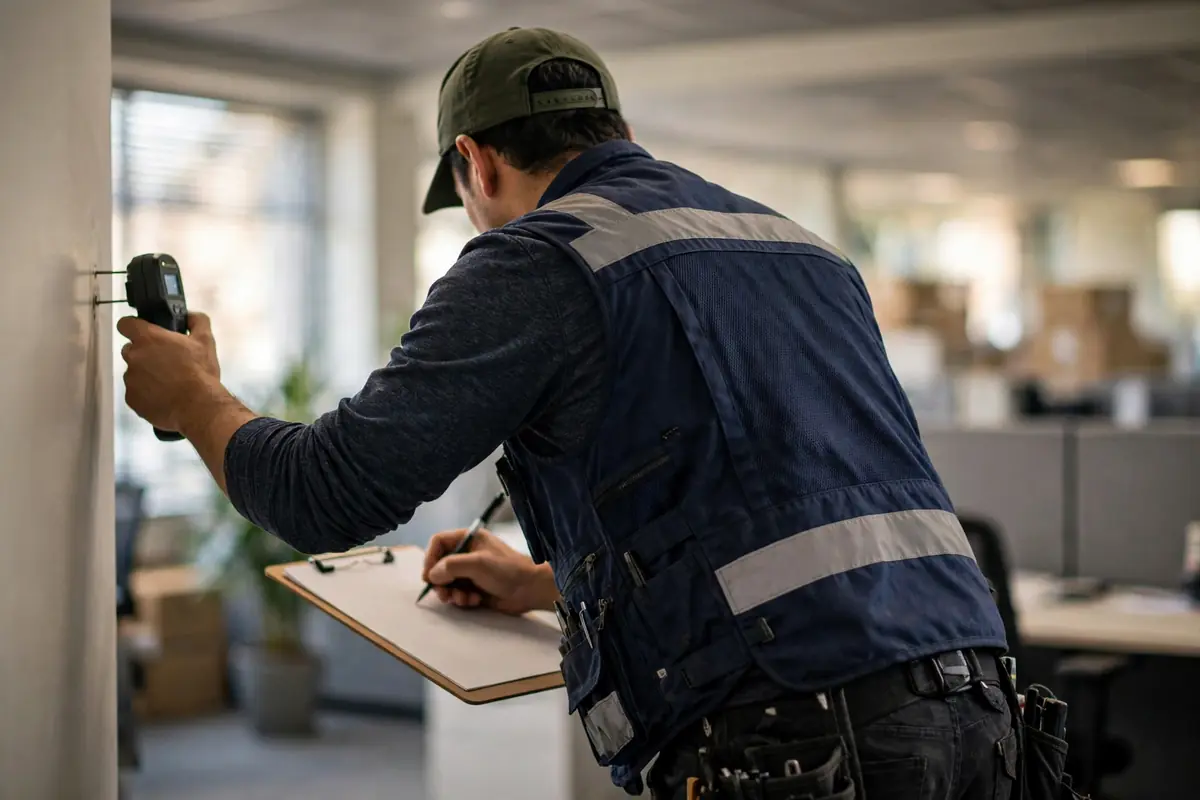
Map the moisture. A moisture meter checks floors, baseboards and walls. A thermal camera can help flag areas for further inspection, and the meter confirms them. Rooms that look dry get checked too.
Contain the wet zone. Barriers keep the work area separate so the rest of the building can keep running where it is safe to do so.
Extract. Pumps and extractors pull the standing water off the floor. This is the commercial water removal step.
Remove what can’t be saved. Depending on the category, that can be ruined carpet tiles, soaked lower drywall, wet insulation and ceiling tiles.
Clean and disinfect where needed. The crew cleans first, because disinfectant doesn’t work on a dirty surface, then uses an EPA registered disinfectant where the contamination and the affected materials call for it. Food and medical areas get extra care.
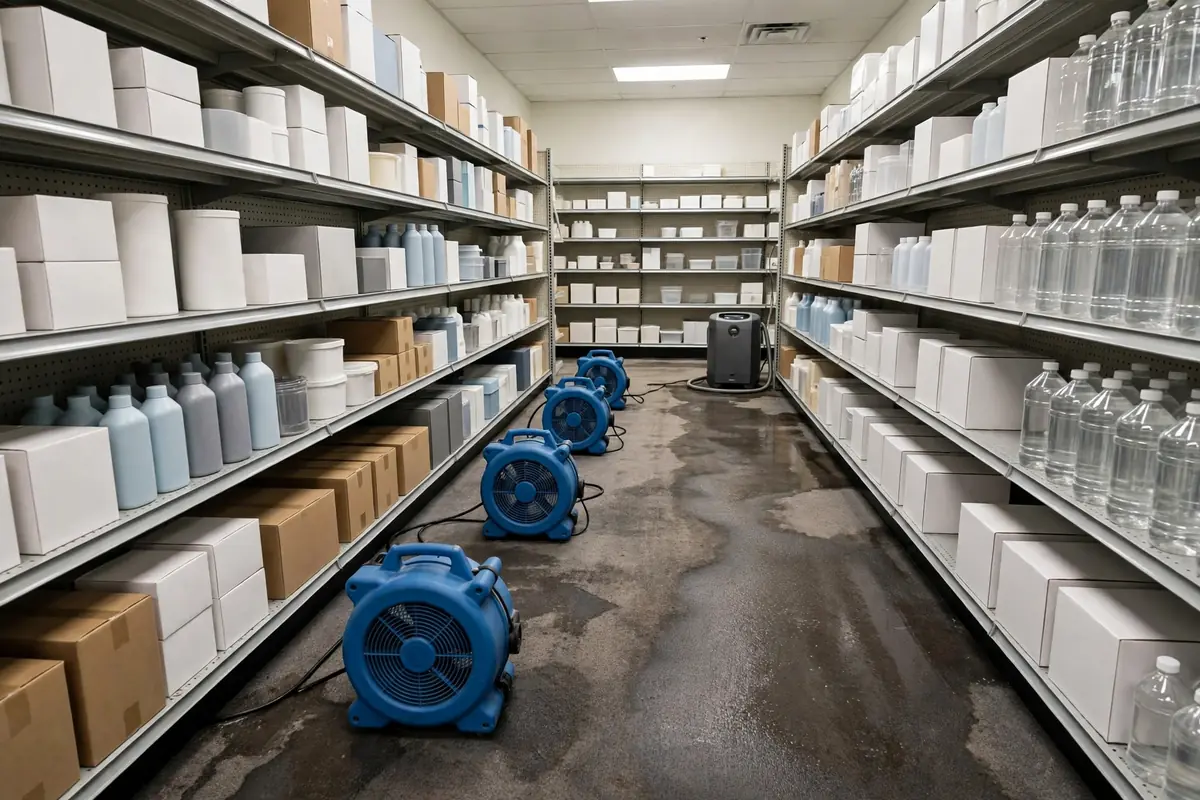
Dry and record. Air movers and dehumidifiers dry the floors and walls. The crew reads the meters against a dry reference and keeps a log. See our structural drying page and our moisture detection and mapping page for the method.
What equipment does a large floor need?
Big, open floors need more suction and more drying power than a house does. Large jobs are usually extracted with high capacity extraction units. A submersible pump handles deeper water first. Portable extractors reach upper floors and spaces a long hose can’t reach. Large areas are dried with commercial capacity dehumidifiers, including desiccant and LGR units, with air movers moving air across wet surfaces. Where people work or food is handled, a HEPA air scrubber cleans the air during the work.
The equipment is matched to the job. Call to confirm what your building needs.
Can my business stay open during water removal?
Sometimes. It depends on how big the loss is, what kind of business you run, whether the area is safe and which rooms are wet. A small, contained loss can leave most of a shop open, and commercial water removal can start in the wet zone while the rest stays open. A flooded kitchen or treatment room usually can’t.
Here is how the work is planned so the rest of the building can keep running:
- Zones. The crew and you decide which areas stay open, which are contained and which are work areas.
- Barriers. Containment barriers separate the wet zone from the open one.
- Safe routes. Entrances, restrooms and exits to open areas must be dry and clear of hazards.
- Power and air. Electrical hazards come first. Air cleaning is used where people work or food and patients are close.
- Phases. Big areas are dried zone by zone, and the plan can take your hours into account.
- Communication. Tell staff, tenants and customers which areas and doors are open.
Before staff, tenants, customers or vendors return, the water should be out, hazards addressed, safe access confirmed and the open areas marked. For food areas, follow the local health authority’s reopening guidance. Downtime is the number every manager watches, so ask for the zone plan in writing.
How do you dry commercial floors and walls?
By material, with readings, until the wet areas match a dry reference. The end point is a measurement, not a date. Hardwood, soaked insulation and thick glue down carpet usually take longer than tile.
| Material | What water does | What usually happens |
|---|---|---|
| Glue down carpet | Sits between carpet and slab, softens adhesive | Extracted and dried in place, checked for adhesive release |
| Carpet tile | Backings slow the slab’s drying | Ruined tiles come out, the rest are dried |
| Vinyl plank or sheet vinyl | Slips under the edges and lifts them | Often lifted to dry the floor under it |
| Concrete slab | Holds moisture and spreads it flat | Dried with airflow and dehumidifiers, checked with a meter |
| Drywall | Wicks water up and across shared walls | Metered, cut if needed |
| Ceiling tiles | Sag first and fall | Wet tiles come out, the space above is checked |
| Particleboard cabinets and bases | Swell and fail | Usually removed |
The mold window matters. The EPA’s guidance for schools and commercial buildings covers response to clean water damage within 24 to 48 hours to prevent mold growth. We don’t remove mold. If you see or smell it, we’ll point you to a licensed company.
The crew uses air movers across wet surfaces and commercial capacity dehumidifiers for the air. Each day it reads the meters and records the numbers. When the wet areas match the dry reference, the job is done.
How is a business job different from a house?
It is bigger, it crosses more walls, and more people have a say. A home loss is usually a room or two and one owner. A business loss can cover a floor, a row of tenant spaces or a whole warehouse, and it brings in a landlord, tenants and an insurer. Insurers and restorers call a water event over a large area a large loss.
| A house | A business | |
|---|---|---|
| Floors | Carpet over pad, wood, tile | Glue down carpet, carpet tile, vinyl, concrete |
| Hidden water | Walls, under flooring | Ceiling space, raised floors, wall cavities, the unit next door |
| Who decides | The homeowner and the insurer | Owner, tenant, landlord, manager and insurer |
| The building is | Empty or lived in | Open for customers, or shut and losing money |
Why does commercial carpet dry differently?
Most commercial carpet has no pad. It is glued straight to the slab or laid as carpet tile, so water sits between the carpet and the concrete. Carpet tile backings slow the slab’s drying. Too much water softens the adhesive, so seams lift and bubbles form. The crew dries glue down carpet in place with repeated extraction passes, air movers and dehumidifiers, and watches for adhesive release as it dries. Ruined carpet tiles come out. Re-gluing or re-laying carpet is an installer’s job, not ours.
Raised floors in server rooms hide water too. It runs under the panels where nobody can see it, so the crew checks there with a meter.
What are the common causes of commercial water damage?
Roofs, toilets, sprinklers, water heaters and HVAC lines cause most of it, according to one large insurer’s claims. Chubb, a commercial insurer, ranks ten sources of commercial water damage by share of losses. Here are its top five. It is one insurer’s claims experience, not a count for every building, but it shows where to look.
| Source | Share of losses in Chubb’s ranking |
|---|---|
| Roofs | About 15% |
| Toilets | 15% (stacked plumbing in multistory buildings) |
| Sprinklers | 14% |
| Water heaters | About 11% |
| HVAC | About 8% |
Vacancy, boiler and machinery, sewer backup, water tanks and water mains make up the rest of Chubb’s list. The roof itself is a roofer’s job. We handle the water that came in. The same goes for a fixture or a pipe: a plumber fixes the part, and we dry what it soaked.
Office water damage cleanup
Open plan offices let water travel a long way before a wall stops it. Office water damage cleanup often involves carpet tile, ceiling tiles and desks full of equipment. A clogged HVAC condensate line can drip into the ceiling space for days before anyone sees a stain. Water near computers is an electrical safety issue first, so power comes off before anyone touches the gear.
Retail shops and strip centers
Stock on the floor is often the biggest single loss in a shop. Lift what you can reach from a dry spot and photograph the rest. In a strip center, units share walls and systems, so water in one suite can wick through drywall into a neighbor that looks dry. The crew checks the shared walls with a meter, and customer access decides which areas can stay open.
Restaurants
Kitchens, dining rooms and restrooms all hold water differently. Water runs under cooking lines, behind coves and into floor drains. Food areas raise the cleaning bar after water, so the crew washes first and then disinfects. Follow the local health authority’s reopening guidance before you reopen food areas.
Warehouses and industrial water extraction
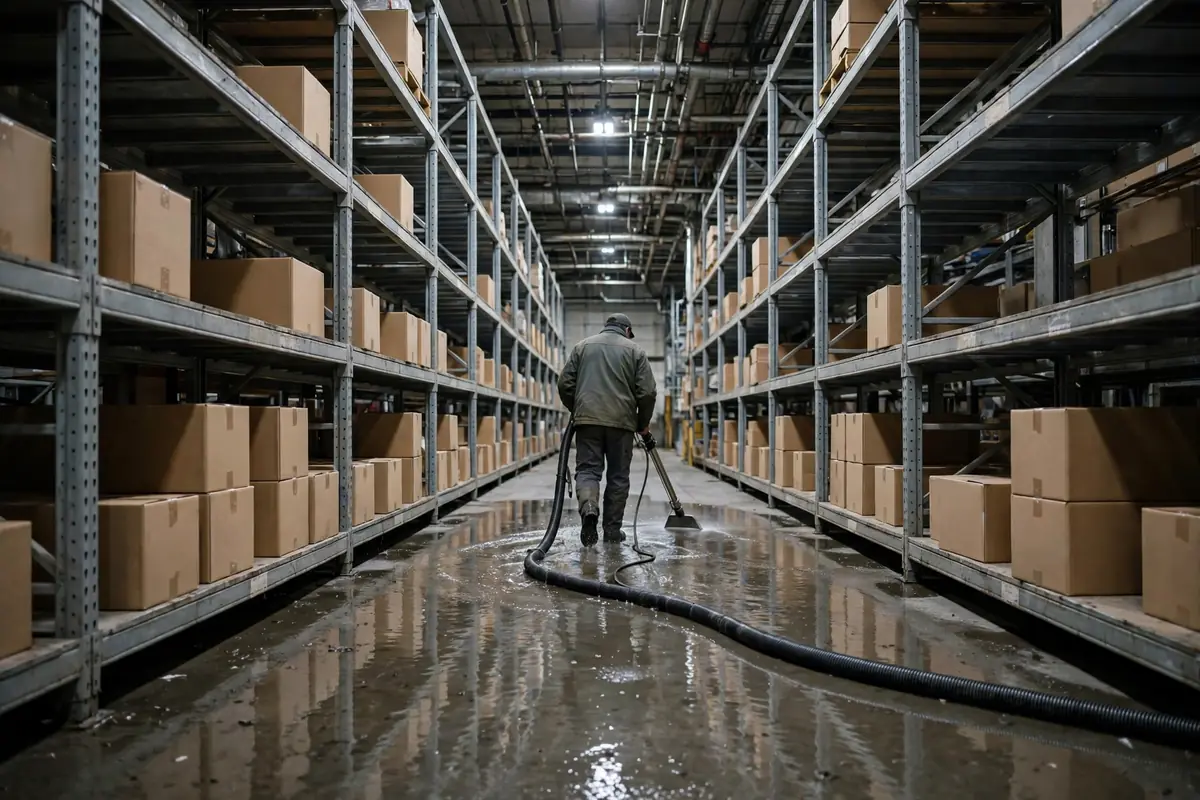
A warehouse is a very large slab with stock and racking at floor level. Water spreads flat and wide across the concrete and reaches the bottom of every rack. Industrial water extraction around plant floor equipment starts with power off and a plan for which zones come out first. Big areas are dried in phases, zone by zone, so work areas and open areas are decided on purpose.
Medical and dental offices
Treatment rooms and equipment raise the bar for cleaning and records. Containment and air cleaning matter more here, and so does a clear written record. Ask your own compliance contact what your practice needs before you reopen a treatment room.
Apartments and multi-tenant buildings
One event can cross several tenancies, a corridor and the floor below. A failed line on an upper floor often drips through the ceiling into the unit under it. The manager, each tenant and the insurer all have a stake. The crew checks neighboring units, corridors and the floor below, not just the room where it started.
Sprinkler discharge
A sprinkler head that opens keeps flowing until someone closes the valve. It doesn’t empty like a tank. One damaged or frozen head can release the system’s water into one area. Notify building management and your fire protection contractor, and follow the building’s emergency procedure. If a fire is suspected, evacuate and call 911. Sprinkler water that has run across a building is not treated as clean, and the crew sets the category on inspection.
Storm water at doors and loading docks: commercial flood cleanup
Heavy rain can push water in at thresholds and dock doors. This is where commercial flood cleanup meets our flood and storm cleanup page, which covers storm events. Storm water can carry dirt and other contamination, so it is checked before it is treated. Rising water from outside is generally excluded from standard commercial property policies, so ask your broker whether you carry a separate flood policy.
Who pays for commercial water damage cleanup, the landlord, the tenant or insurance?
Your lease and your policy decide, and nobody can guess the answer without reading both. We don’t tell you who pays in your case. Here is how it usually works, as general information and not legal advice.
What does my lease say?
The lease decides who repairs what. A common pattern is that the landlord covers the building, such as the structure, roof, common areas and base systems, and the tenant covers its own improvements, equipment, stock and business income. Raizner Law, a Texas firm, says the lease language ultimately decides responsibility, that a tenant who fails to report a water problem promptly can be held liable for the extra damage, and that a triple net lease puts most repairs on the tenant. Many leases require written notice to the landlord quickly. Read yours, or have your broker read it.
What does insurance usually cover?
Most commercial property policies cover sudden and accidental water damage, such as a burst pipe or an accidental sprinkler discharge. Long term leaks and neglect are the excluded side. Rising water from outside, which is flood, is generally excluded and needs a separate flood policy. If your policy includes business income coverage, sometimes called business interruption, it may help cover lost net income and certain ongoing expenses after a covered loss. Your policy decides, and your insurer decides what it pays. Insurers look at the cause, the policy and your maintenance records.
What should I keep for my claim?
Keep a loss file, because it is the part you control. After commercial water damage cleanup, adjusters work from the paper, so start the file on day one:
- Timestamped photos and video of the source, the spread and the waterline, taken before anything was moved
- Our extraction records and the daily moisture readings log, if you ask for copies
- A list of damaged stock and equipment, with photos
- Invoices and receipts
- Your lease and your written notice to the landlord
- Maintenance records for the roof, plumbing, sprinklers and HVAC
Don’t throw away damaged equipment or stock until you have photographed it and asked your adjuster how to document it.
What do you not do, and who handles it?
We extract the water and dry the building. We don’t repair or rebuild it. Commercial water damage cleanup here means extraction and drying.
The table below shows which trade handles the source. A few other jobs are not ours either:
- Rebuilding walls, ceilings or floors belongs to a contractor.
- Re-gluing or re-laying carpet belongs to a flooring installer.
- Mold assessment and removal belongs to a company licensed by Texas.
- Recovering electronics, documents or contents belongs to a specialist.
- Sewage backups follow our sewage backup cleanup page.
- Routine cleaning belongs to your janitorial service.
Many restoration companies also sell rebuilds. We stop once the building is extracted, cleaned and dry.
Who do I call for what?
One water event usually needs more than one trade. We remove the water and dry what it soaked. The source belongs to someone else.
| Problem | Who handles it |
|---|---|
| Standing water, wet floors, wet walls, drying | Us |
| A broken pipe, valve, fixture or water heater | A plumber |
| A discharged sprinkler head or a system fault | Your sprinkler contractor, and the fire department if needed |
| Water near outlets, panels or equipment | An electrician |
| Rain coming through the roof | A roofer |
| The building shell, shared systems, the lease | Your landlord or property manager |
| Coverage and your claim | Your insurer or broker |
How do I get ready before water shows up?
Know your shutoffs and keep a contact list before the event. Most managers learn where the valve is during the emergency. A short plan makes any commercial water cleanup easier, so learn it now.
- Find the main water shutoff, the water heater valve and the fixture shutoffs, and label them. Ask your property manager where the fire sprinkler control valve is and what the building’s emergency procedure says.
- Keep a list with after hours numbers for the landlord, tenants, a plumber, an electrician, your insurer and us.
- Replace hoses every three to five years, Chubb says, and replace water heaters before they reach seven to ten years old.
- Have the roof inspected, and keep the HVAC condensate drains clear.
- Check vacant units. Chubb says empty buildings are less likely to have a leak found early.
- Put water sensors where leaks start, such as near water heaters, under sinks and in mechanical rooms.
- Keep your maintenance records. Insurers ask for them.
Commercial Water Extraction in Rowlett
We take calls for Commercial Water Extraction in Rowlett ZIP codes 75088 and 75089, from Downtown Rowlett near Main Street and City Hall to the shops and offices along Lakeview Parkway, Dalrock Road and Miller Road, and the properties near Lake Ray Hubbard. Call to confirm your address, and to check coverage if you are in a nearby city.
Heavy rain causes real trouble here. Water comes in at doors and dock thresholds, and if your building sits on a concrete slab, the water has nowhere to drop. It spreads flat across the floor and wicks into the walls. If the water is coming from the city main or the street, call Rowlett Public Works at (972) 412 6287 on weekdays, or (972) 412 6201 after hours for water and sewer emergencies. For other water damage in Rowlett, see our emergency water extraction page.
Water in your Rowlett business? Call (555) 247-0199.
What you can expect when you call
- Questions first. We ask where the water came from, which floors and spaces are wet, and how long it ran, because that sets the water category.
- Readings. Moisture readings show where the water went, and the job ends when they read dry.
- A record you can use. The crew takes photos and moisture readings, and you can ask for copies for your insurer.
- Plain advice. We tell you when you need another trade and what we don’t do.
Questions Rowlett business owners ask
What should I tell you when I call?
Tell us what kind of building it is, where the water came from, how long it ran, and which floors, suites or rooms are wet. Say whether power is off and whether other tenants are affected. Give us your address and ZIP code. If you lease, mention who your landlord or manager is.
Can you handle a large loss?
We scope large jobs by area and phase them zone by zone. Call with the affected square footage, the number of floors or suites, and building access details. We confirm whether we can take the job and explain the next steps. We do the extraction and the drying. We don’t rebuild.
Do I need an insurance claim before you start?
No. You can call about a loss that you plan to pay for yourself. A loss file with photos and readings still helps if you decide to claim later. Your policy decides what is covered.
How quickly should standing water come out?
As soon as it is safe to enter. Water that sits does more damage to flooring, drywall, stock and equipment, so call early.
What if the water is in the unit next door and not mine?
Tell your property manager right away, and ask that moisture be checked in your space too. Water crosses shared walls and floors, so a dry looking suite can still be wet inside the wall. Take your own photos from a dry spot.
What about computers, servers and point of sale equipment?
Power comes off first, and an electrician decides when it is safe to touch. Don’t move gear while you are standing in water. Photograph it. We handle the water around it. Recovering the equipment or the data belongs to a specialist.
My leased space keeps flooding at the back door. What can I do?
Write down the date of every event, take photos, and tell your landlord in writing each time. The source may be the roof, the grade or the door seal, and that belongs to a roofer or a contractor. We remove the water and dry the space each time it happens.
Call now for Commercial Water Extraction in Rowlett
For a plumbing leak, shut off the supply only if you can safely reach the valve. Keep people out of the wet area, then call (555) 247-0199 for commercial water extraction in Rowlett. Call to confirm service availability for your address.
Call (555) 247-0199Sources
(last updated November 2026)
- Chubb: 10 most common sources of commercial water damage
- U.S. EPA: Water damage table from Mold Remediation in Schools and Commercial Buildings
- Raizner Law: who is responsible for water damage in a leased commercial property
- ServiceMaster Restore: how to respond to sprinkler system leaks in your commercial building
- ARO Restorations: commercial water damage guide, lease and sprinkler shutoff steps
- ANSI/IICRC S500: water damage restoration standard, used here only as a classification system
- NAIC: business interruption coverage basics
- City of Rowlett: Public Works
- Texas Department of Licensing and Regulation: Mold FAQ