Appliance Flood Cleanup in Rowlett, TX
Appliance flooding the house? Stop the water at the appliance. Keep out of standing water near outlets. Call (555) 247-0199 now.
We take emergency calls 24 hours a day for appliance leak cleanup in Rowlett homes, ZIP codes 75088 and 75089. This page covers three common sources: a leaking or burst water heater, a washing machine hose or overflow, and an AC drain line that backs up. Your plumber, appliance technician or HVAC technician fixes the failed part. We pump out the water, find the hidden moisture and dry your home.
Call (555) 247-0199 now for Appliance Flood Cleanup in Rowlett.
What should I do first when an appliance floods my house?
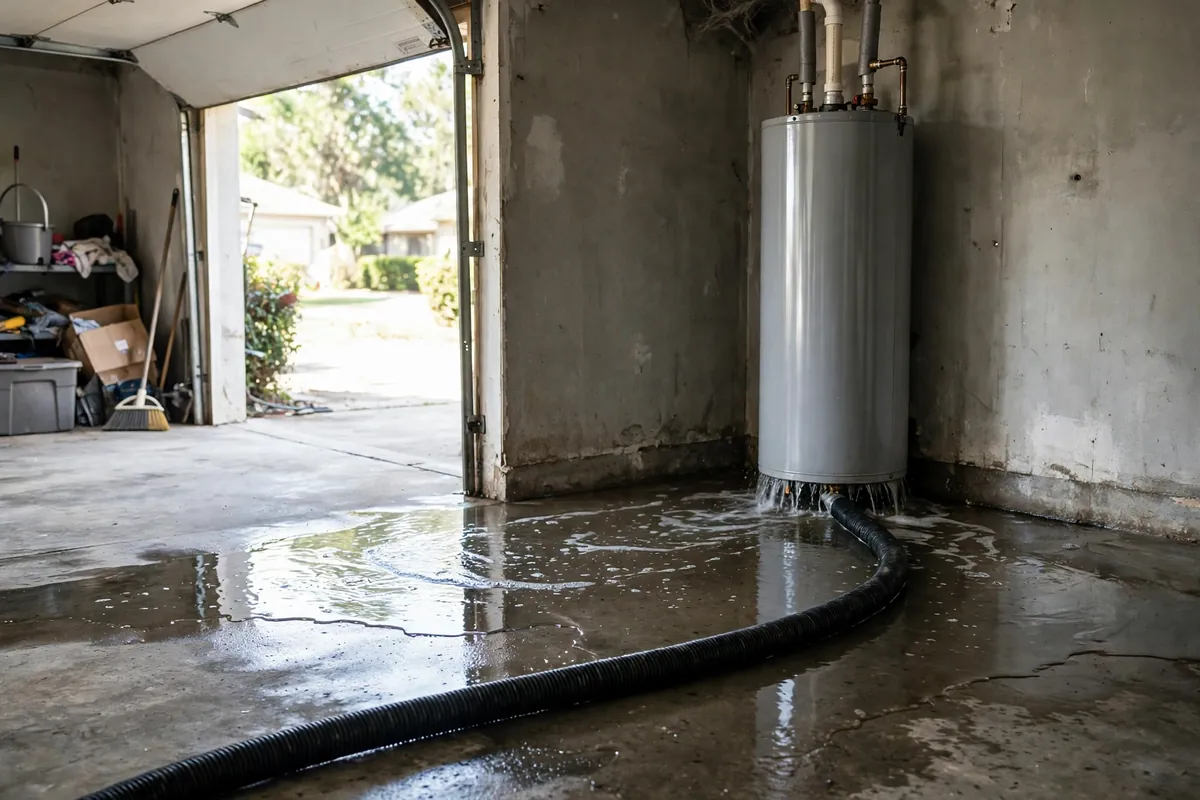
Stop the water at the appliance, then keep out of any standing water near outlets until the power is off. Photograph the floor before you move anything. Then call the right trade for the part, and call us for the water.
A valve stops a leak from an appliance. It won’t stop water coming in from outside or up from a floor drain. If that’s what you have, stay out of the water and call.
Water heater: what do I shut off first?
A. O. Smith, a water heater maker, says to turn off the power or gas before you inspect a leaking heater, then close the cold water shutoff valve on the line leading to it.
Electric heater. Switch off the breaker labeled for the water heater. If you can’t tell which one it is, A. O. Smith says to shut off the main breaker, but only if the panel is dry and easy to reach.
Gas heater. Turn the gas control knob to off, or close the gas shutoff valve if you’re comfortable doing it. If you smell gas, leave the house and call the fire department.
No valve on the cold line? Shut off the water to the whole house.
Tank or tankless. The first rule is the same: water off, power or gas off.
Never cap or plug the temperature and pressure relief valve. Manufacturer manuals say its discharge pipe must stay open, and a dripping T&P valve is a plumber’s job.
Washing machine: how do I stop it?
Close the hot and cold shutoff valves behind the machine. Unplug it only if the floor and the cord are dry. If not, turn off the breaker for that room. Move wet boxes and baskets off the floor.
AC leaking inside: what do I do?
Turn the AC off at the thermostat so it stops making more water. Check the ceiling below an attic unit for a stain or a sag, and keep out from under it. An HVAC technician clears the drain line, and the system stays off until it’s checked.
What happens when each appliance fails?
Each one floods differently. A water heater leaks from a tank full of water, a washer hose fails under pressure, and an AC drain line backs up and spills slowly. All three leave water on a slab floor, and it spreads into walls and under flooring.
Water heater leak cleanup
Residential tank water heaters commonly hold 30 to 80 gallons, with 40 and 50 gallon tanks the most common, according to Ohio State’s Green Home resource. The tank is only part of the flood. The cold supply keeps pushing water in until the inlet valve is closed, so a leak left running becomes a flood. In the IBHS study of insurance claims, the most common cause of water heater failure was a slow leak or a sudden burst in the tank, followed by supply line failures.
Many Rowlett homes keep the heater in a garage or an attic. In a garage, water can run across the slab toward the door and under a shared wall. In an attic, it can come down through a ceiling.
A puddle under a heater isn’t always a leak. Dry the floor and the tank, and watch where the water comes back. A drip from a top fitting can run down and pool at the base, so a plumber should find the real source.
Washing machine flood
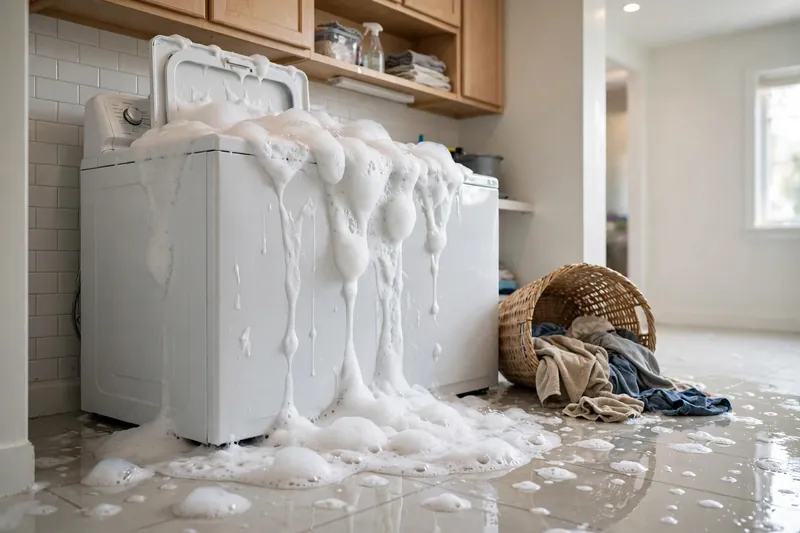
IBHS found that the water supply hose is to blame in over half of washing machine losses, and it lists water heater failure and washing machine failure among the top five causes of home water damage. State Farm says a washer hose holds about 70 pounds of pressure, and a failed hose averages 650 gallons an hour. That can mean nearly 31,000 gallons over a weekend away.
A drain hose that slips off its standpipe floods the floor too, but that water has been through the machine. A leak from the bottom can come from a hose, a seal or a pump, and an appliance technician finds which. Stop using the machine until it’s checked.
AC drain line overflow
In a Texas summer, a healthy AC system commonly drains 5 to 20 gallons of water a day, according to Frymire, a DFW HVAC company. That water leaves through the condensate drain line. When algae or debris clog the line, the drain pan fills, and water reaches the secondary pan, the float switch or the floor. An attic air handler can stain or sag the ceiling below it.
Dishwasher and refrigerator lines
A dishwasher can leak from its supply line, door seal or drain. A refrigerator ice maker line can leak behind the unit for days. The water often hides behind the appliance and under the flooring. Shut off the supply valve, pull the unit out only if the floor is dry, and call us to check the moisture.
Who fixes what: plumber, appliance technician, HVAC technician or us?
A plumber, an appliance technician or an HVAC technician fixes the failed part. We remove the water and dry what it soaked. Stop the water first, then call both.
| Job | Plumber | Appliance technician | HVAC technician | Us |
|---|---|---|---|---|
| Repair or replace a water heater | Yes | No | No | No |
| Replace a washer hose or valve | Yes | Sometimes | No | No |
| Repair a washing machine or dishwasher | No | Yes | No | No |
| Clear or repair an AC drain line | No | No | Yes | No |
| Pull out the water | No | No | No | Yes |
| Find hidden moisture and dry the structure | No | No | No | Yes |
If nobody dries the structure after the part is fixed, the water stays in the wall and the floor. A burst supply pipe, storm water or sewage is a different job, and each has its own page: burst pipe cleanup, flood water removal and sewage backup cleanup.
Where does the water go in a slab home?
Across the floor first. In a slab home the water spreads, soaks the edges of the flooring, and wicks into baseboards and the lower drywall. It can also travel under flooring and through shared walls into the next room. There is no basement to hold it.
| Floor or surface | What water does | What usually happens |
|---|---|---|
| Tile and grout | Runs under the edges and sits in grout lines | Often dried in place, with a moisture check |
| Luxury vinyl plank | Gets trapped under the planks | Often lifted to dry the floor under it |
| Laminate | Soaks in at the edges and swells | Often removed |
| Hardwood | Soaks in and cups | Case by case, the meter decides |
| Carpet and pad | Holds water in the pad | The pad usually comes out |
| Baseboards and lower drywall | Wick moisture up from the floor | Checked with a meter, cut if needed |
A mop only removes what you can see. For a heater in a garage, water can go under the shared wall into a laundry room or hallway, so we put the moisture meter on those walls before anything is pulled.
What does appliance leak cleanup include?
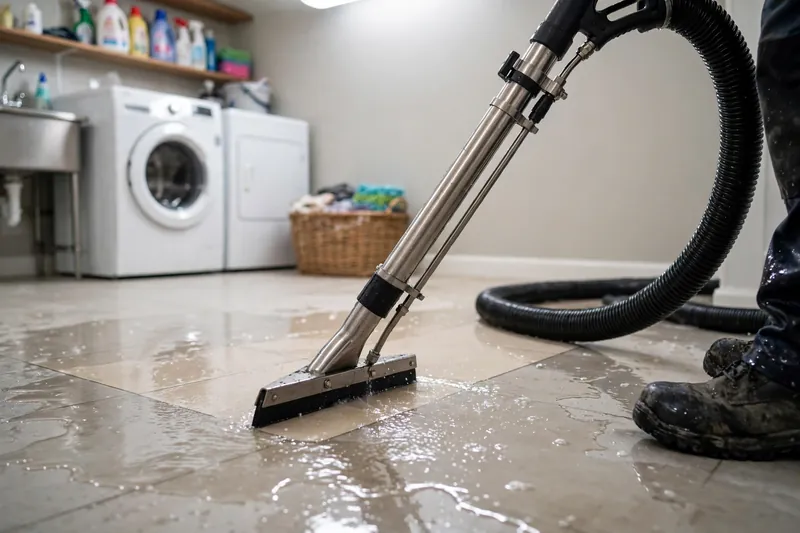
Appliance leak cleanup means finding the water type, mapping the moisture, pumping out the water, removing what can’t dry in place, cleaning hard surfaces, drying the structure, then confirming dry readings. You get photos and a drying log for your claim.
Is the water clean or gray?
Under the IICRC S500 standard, restoration companies commonly treat a water heater or supply line leak as Category 1, clean water, at first. Washing machine and dishwasher discharge is usually Category 2, gray water, because it carries soap, soil and food. Cleanfax lists a washing machine discharge and a dishwasher overflow as Category 2 examples. Clean water that sits can get worse, so the crew sets the category on inspection.
Assessment and safety. We confirm the water to the appliance is off and check for electrical hazards.
Moisture mapping. A moisture meter and a thermal imaging camera show how far the water went, including inside walls and under flooring.
Extraction. Pumps and extractors remove standing water from floors and carpet.
Remove ruined materials. Carpet pad, swollen laminate, soaked drywall and wet insulation come out.
Clean hard surfaces. For gray water, detergent and water first, then antimicrobial treatment.
Structural drying. Air movers and dehumidifiers dry the structure.
Final moisture check. Meter readings and a drying log.
What happens in the first 24 hours?
A typical visit: we check power and safety, map the moisture, pump out the water, pull what can’t dry in place, set the drying equipment, and come back the next day for the first meter reading.
What can be saved after an appliance flood?
Clean water from a water heater or supply line often leaves more to save, if drying starts quickly. Gray water from a washer or dishwasher means more comes out. Hard, solid surfaces can usually be cleaned and dried in place.
| Usually removed | Usually dried in place |
|---|---|
| Carpet pad | Concrete slab |
| Laminate that swelled | Tile with a moisture check |
| Soaked lower drywall and insulation | Sound framing lumber |
| Particleboard cabinet bases | Hardwood, if caught fast |
We tell you what stays before we start. Photograph it first, and keep damaged items until your adjuster has seen them, the Texas Department of Insurance says.
How long does it take?
It depends on how far the water spread and what it soaked. We stop when meter readings in the wet areas match dry readings elsewhere in your home. Restoration industry guides generally put an average job at 3 to 5 days, and hardwood and soaked insulation usually take longer than tile.
Will mold grow?
It can, if wet materials stay damp. The EPA says to dry water damaged areas and items within 24 to 48 hours to prevent mold growth. We don’t remove mold, and we’ll point you to a licensed company.
Does insurance cover a water heater or washer leak?
Often, yes, if it was sudden and accidental. The Texas Department of Insurance says most homeowner and renter policies cover sudden and accidental water damage, and it lists a broken washer hose as an example. TDI also says policies usually won’t cover damage from gradual leaks. Your policy decides.
Gradual leaks. A drip that ran for weeks or months usually falls outside the policy.
Mold. TDI says mold that develops on an item damaged by a covered event would be covered, but policies differ, so ask your agent.
The appliance itself. Ask your agent about replacing the heater or washer. The water damage and the appliance are often treated separately.
Belongings. TDI says your personal belongings are covered too, for a covered event.
Documenting. Photos and video before repairs, and keep receipts. Temporary repairs are generally fine. Wait on permanent ones until your insurer has seen the damage.
Renters. The owner’s policy won’t cover your belongings. Renters insurance does.
TDI answers questions at (800) 252 3439. We give your adjuster the moisture logs and photos, and your insurer decides what it pays.
How do I prevent the next appliance flood?
Close the washer valves when you’re away, inspect the hoses, and replace them on a schedule. State Farm says to turn off the valves if you’ll be gone several days and to consider steel braided hoses in place of rubber ones.
Washer hoses. IBHS tips, as insurers report them, say to inspect hoses at least once a year, and one summary says every 6 months. Travelers says to replace them every five years, or at once if one is cracked or bulging. In the IBHS study, the average hose failed after about eight years, so five is the safe schedule.
Shutoff and sensors. An automatic shutoff valve or a leak sensor warns you or closes the line early.
Water heater. IBHS tips say a plumber can inspect the supply lines and flush sediment from the tank each year. A drain pan piped to a drain catches small leaks, and the T&P discharge pipe stays uncapped.
AC. Have the condensate drain line cleared before summer, and ask an HVAC technician whether your system has a float switch and a secondary pan.
Dishwasher and refrigerator. Check the supply lines when you pull the unit out.
What did 2026 show?
After the January 2026 freeze, NBC 5 DFW reported that pipe bursts and water heater failures surged across North Texas, and a plumbing expert it quoted said tank and tankless heaters were leaking and bursting. Summer then brought 52 days of 100 degrees or more, according to the National Weather Service as reported by KERA. We found no count of appliance floods in Rowlett itself, so treat these as regional signals: after a hard freeze, have a plumber check the heater, and after a long summer, have the AC drain line checked.
Appliance Flood Cleanup near you in Rowlett
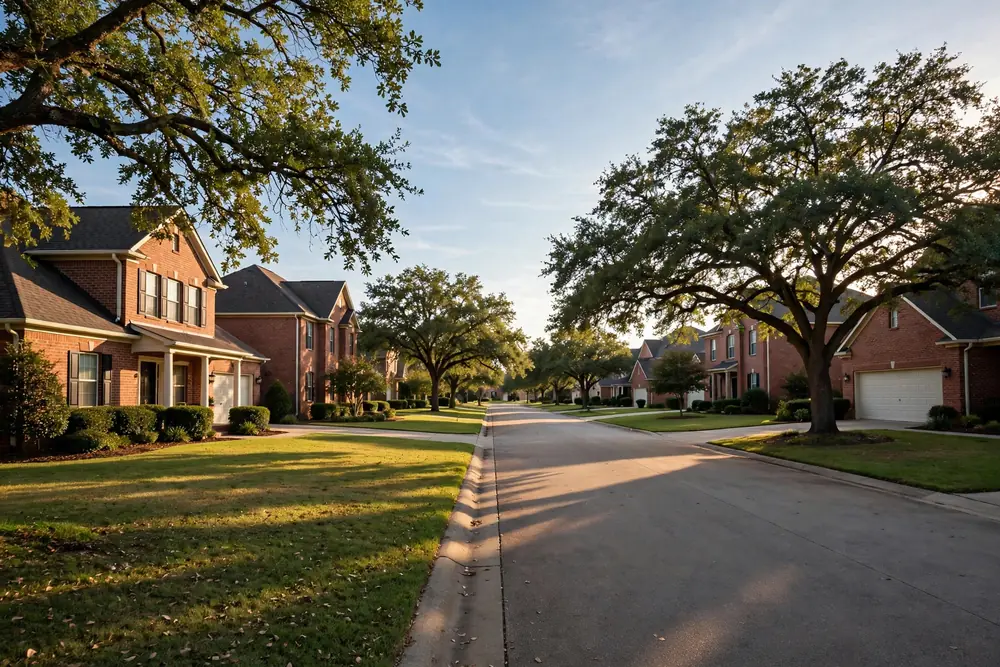
If you searched for appliance leak cleanup near me and you live in 75088 or 75089, you’re in our area. We work across Rowlett, from Downtown Rowlett by Main Street and City Hall to the neighborhoods along Lake Ray Hubbard, including Bayside and Waterview, and off Lakeview Parkway, Dalrock Road, Miller Road and Liberty Grove Road.
We help families near Rowlett High School, Coyle Middle School, Schrade Middle School and Herfurth Elementary, and neighbors around Pecan Grove Park, Herfurth Park and Paddle Point Park. We also reach Garland, Sachse, Wylie and Rockwall. For other water damage in Rowlett, see our emergency water extraction page.
Appliance flooded your Rowlett home? Call (555) 247-0199.
Why Rowlett homeowners call us
Comparing Appliance Flood Cleanup companies? Ask each one for these things. Here is what we do.
- A real person answers, day or night. We answer calls 24 hours a day, 7 days a week.
- Moisture readings. A moisture meter and a thermal imaging camera show where the water went, and the job ends when the readings say dry.
- A record you keep. A moisture readings log and photos, for you and your adjuster.
- Straight advice. We tell you when you need a plumber, an appliance technician, an HVAC technician or a licensed mold company.
Appliance flood questions Rowlett homeowners ask
Can a leaking water heater flood a house?
Yes. A tank commonly holds 30 to 80 gallons, and the cold supply keeps feeding it until the inlet valve is closed. Shut that valve, turn off the power or gas, then call a plumber and us.
What should I do if my washing machine floods?
Close the hot and cold shutoff valves, and keep out of standing water near outlets until the power is off. Photograph the floor, then call an appliance technician or plumber for the part and us for the water.
Who do I call first, a plumber or a restoration company?
Stop the water at the appliance, then call both. A plumber, appliance technician or HVAC technician fixes the part. We remove the water and dry the structure.
Is washer overflow water clean or gray?
Usually Category 2, gray water, because it has been through the machine. A water heater or supply line leak is usually Category 1 at first, but clean water can get worse if it sits.
Does insurance cover a broken washer hose?
Often. TDI says most Texas homeowner and renter policies cover sudden and accidental water damage, and it names a broken washer hose. Gradual leaks usually aren’t covered, and your policy decides.
What if the washer leaks while I’m away?
Close the valves when you can reach them, and photograph everything. State Farm says a failed hose averages 650 gallons an hour, so water that sat longer soaks more.
My AC is leaking inside. What do I do?
Turn it off at the thermostat and keep out from under a sagging ceiling. A clogged condensate drain line is the usual cause, and an HVAC technician clears it.
Is the puddle under my water heater a leak or condensation?
It can be either. Dry the floor and the tank, and watch where the water comes back. Never cap the T&P relief valve, and have a plumber check the tank.
Do you repair the appliance or the hose?
No. A plumber replaces the heater or hose, an appliance technician repairs the washer or dishwasher, and an HVAC technician clears the drain. We remove the water and dry what it soaked.
I rent. What should I do?
Shut off the water if you can, then tell your landlord right away. The owner’s policy won’t cover your belongings, so renters insurance matters.
Call now for Appliance Flood Cleanup in Rowlett
Stop the water at the appliance, then call (555) 247-0199. We handle water heater, washing machine and AC drain line floods in 75088 and 75089, open 24 hours a day.
Call (555) 247-0199Sources
(last updated November 2026)
- Texas Department of Insurance: water damage and mold coverage, and the disaster claims FAQ
- A. O. Smith: what to do when your water heater leaks, and water heater manuals (T&P relief valve)
- State Farm Newsroom: A $30M Load of Laundry
- IBHS findings on appliance water damage, as reported by Travelers (Insurance Journal) and Brotherhood Mutual
- Ohio State University Green Home: water heating and tank sizing
- Frymire: how much water should drain from an air conditioner
- NBC 5 DFW: Pipe bursts and water heater failures surge as freeze eases in North Texas (January 2026)
- KERA News: North Texas heat records, September 2026, from National Weather Service data
- Cleanfax: Water damage categories
- U.S. EPA: A Brief Guide to Mold, Moisture and Your Home
- Texas Department of Licensing and Regulation: Mold FAQ